Preparing for a Hair Transplant Consultation: What Really Matters
A practical guide to diagnosis, donor-area assessment, hairline planning, expectations, and the questions worth asking before choosing a procedure.
Key takeaways
- The cause and stability of hair loss should be assessed before a transplant technique is discussed.
- Donor supply, facial proportions, and future hair loss all influence a responsible hairline plan.
- A useful consultation explains limitations, recovery, alternatives, and long-term maintenance—not only graft numbers.
Start with the reason for hair loss
A hair transplant moves suitable follicles from a donor area to an area with reduced density. It does not stop every cause of ongoing hair loss. That is why a responsible consultation begins with the pattern, duration, progression, family history, scalp condition, current medicines, and relevant medical history.
Some people may benefit from medical management, scalp care, observation, or further assessment before surgery is considered. The objective is not to sell a technique quickly; it is to determine whether transplantation is appropriate and how it fits into a longer-term plan.
- Bring a list of medicines and supplements.
- Explain when shedding or thinning began and how it has changed.
- Mention previous procedures, scalp conditions, and treatments already tried.
Donor capacity and hairline design are connected
The donor area is a limited resource. Density, hair caliber, curl, contrast with the scalp, and the size of the treatment area all affect what can reasonably be achieved. A high graft estimate is not automatically a better plan if it places unnecessary pressure on the donor area.
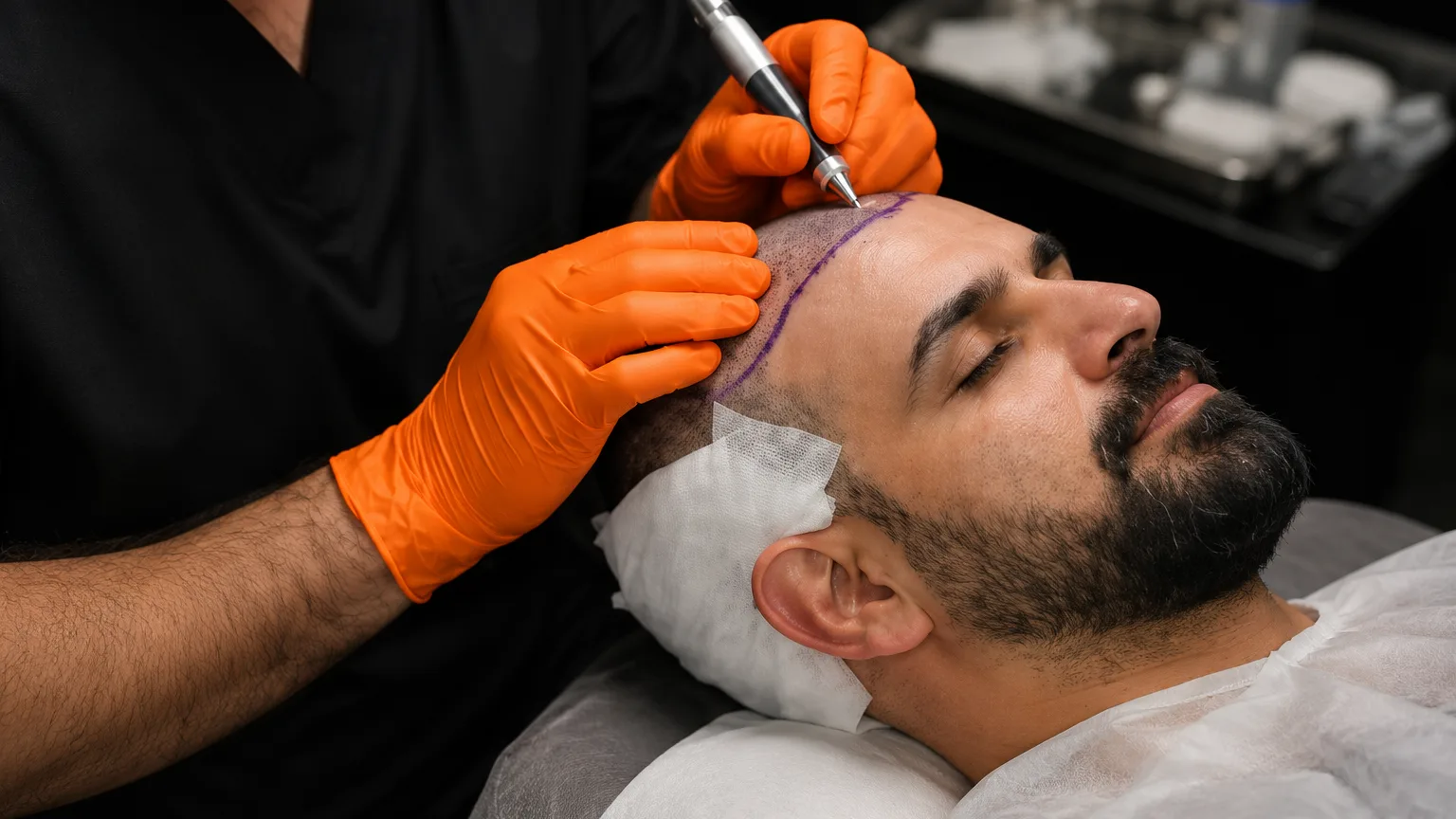
Hairline design should account for age, facial proportions, existing hair, and the possibility of future loss. Conservative planning often ages more naturally and preserves options if additional treatment is needed later.
Questions that improve the consultation
Ask who will perform each part of the procedure, how candidacy is assessed, and why a particular method is being recommended. You should also understand what the plan cannot achieve. Clear limitations are a sign of responsible communication, not a lack of confidence.
- What diagnosis or pattern of hair loss does the team see?
- How was the donor area evaluated and protected?
- Why is this hairline shape and density appropriate for me?
- What short-term restrictions and follow-up will be required?
- What is the plan if existing non-transplanted hair continues to thin?
Think in months, not days
Early appearance is not the final outcome. The scalp needs time to recover, transplanted hairs can pass through temporary changes, and visible growth develops gradually. Timelines differ between patients, so the clinic should explain milestones as ranges rather than guarantees.
Before deciding, make sure you understand aftercare, washing instructions, activity limits, follow-up appointments, and how to contact the care team if something feels wrong. A good consultation leaves you informed enough to pause, compare options, and decide without pressure.
Medical information notice
This journal provides general education and does not diagnose a condition, confirm suitability, or replace advice from a qualified clinician who has assessed you. Recovery instructions from your own treatment team should take priority over general information.
Written by
EuroAsia Patient Education Team
General patient education